Can I order a small run of handmade soap boxes?
Yes. Quantities are quoted per order and we work with makers who pour a few dozen bars at a time.
Written prices from £0.25 a box. Free proof, made in 4–6 business days, free tracked UK delivery.
Hand-cut bars are never quite the same twice, so the box has to forgive a millimetre or two. We make tuck end cartons, open-top trays and tissue-lined boxes sized to your biggest bar, in runs small enough for a maker who pours twenty bars at a time.
| Bar | Typical box size |
|---|---|
| Loaf-cut 100 g bar, about 85 x 60 x 25 mm | About 92 x 66 x 30 mm tuck end |
| Loaf-cut 120 g bar, about 90 x 65 x 30 mm | About 96 x 70 x 35 mm tuck end |
| Chunky 150 g bar, about 80 x 60 x 45 mm | About 86 x 66 x 50 mm open-top tray |
| Three mixed bars | About 200 x 100 x 60 mm lidded box with shred |
Handmade soap boxes are printed cartons made for bars that are poured, cured and cut by hand rather than pressed by machine.
They are cut with a little extra room so uneven bars still fit, and they can carry a batch label, a story panel and your maker's mark. Quantities are quoted per order, so short runs are fine.
A machine-pressed bar is the same size every time.
A hand-cut bar is not. One end of the loaf is thicker, the cutter wanders a little, and a bar that cured by the window shrank more than one in the cupboard.
So a handmade soap box is cut to the largest bar you make, with about 5 mm to spare, rather than to a tight nominal size. The flaps hold the bar either way.
The box also tends to say more. A batch number, a cure date, the maker's name and a line about the pour all have a place on a handmade carton.
This range is for the maker who sells bars by the dozen rather than by the pallet.
The groups below cover most of the quotes we send.
Makers who want a bar visible through the carton, rather than fully covered, usually pick from our window boxes for soap bars instead.
Lay out a full batch after curing and measure the biggest bar in each direction.
Add 5 mm to the length and width and 4 to 5 mm to the depth. That is your box.
It sounds loose, but a tuck end carton holds a bar by its flaps, not by its walls. A 90 mm bar in a 96 mm box does not rattle; a 90 mm bar in a 90 mm box will not close.
If your bars really vary, a wrap of tissue takes up the difference and makes the unboxing feel considered. More worked examples are on the UK cosmetic box size page.
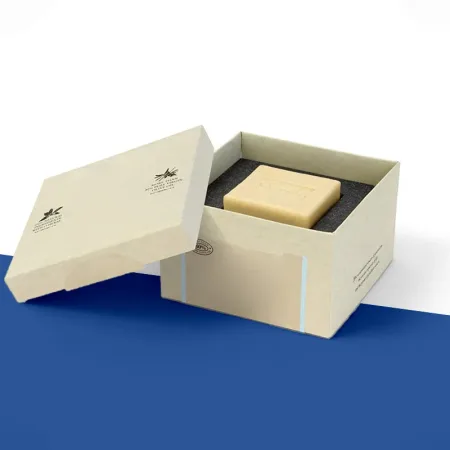
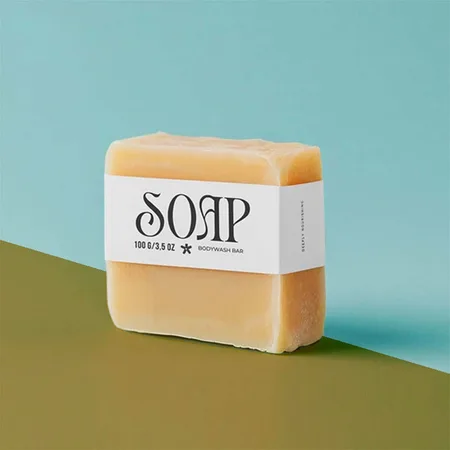
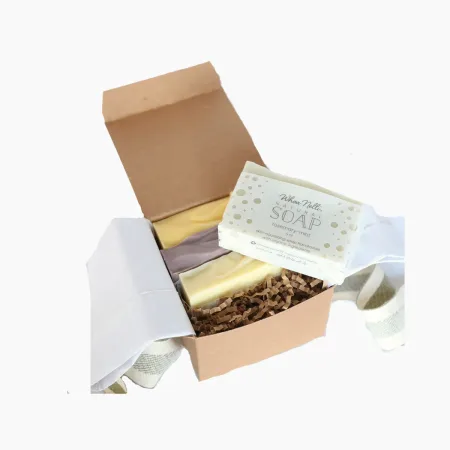
Our photos show three answers.
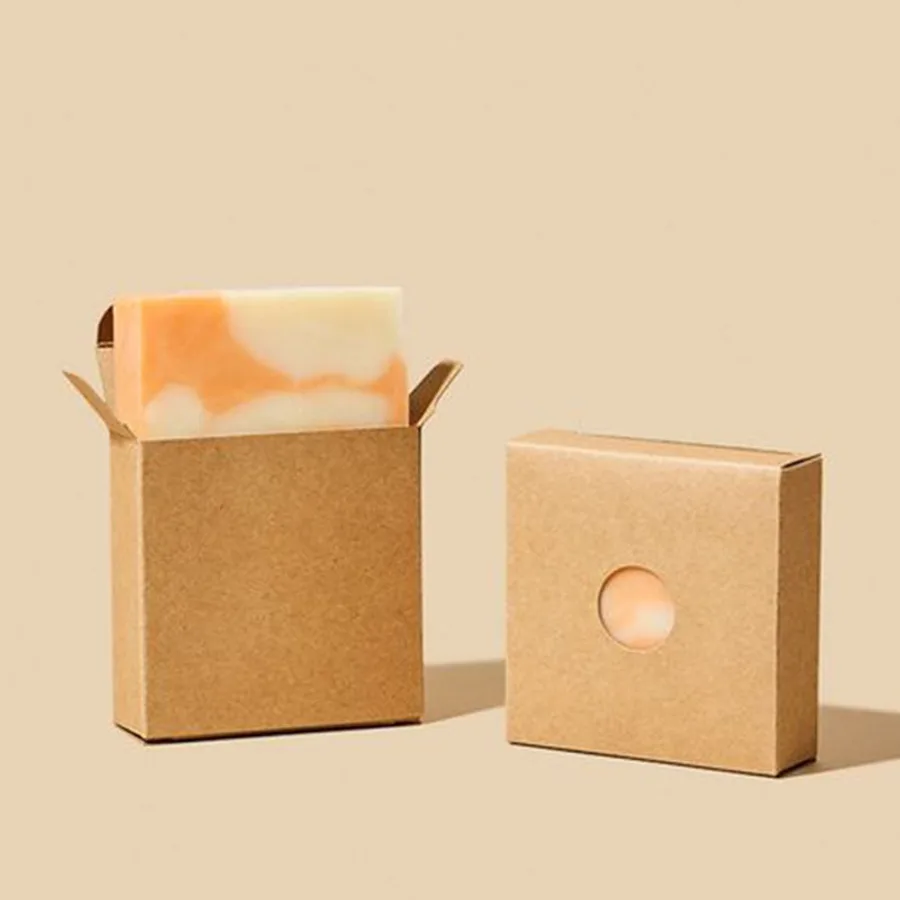
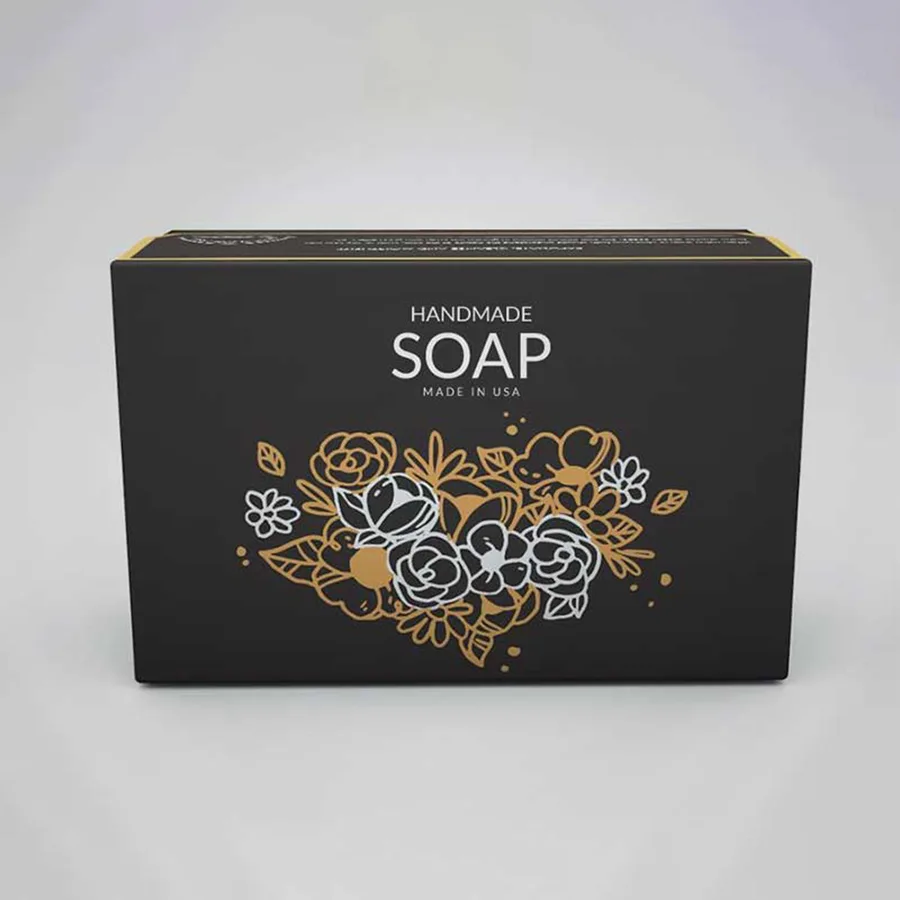
A plain kraft tuck box with a small label, a black box with gold and white florals, and a kraft tray with shredded paper and three bars inside.
Every board and finish is confirmed on request when we quote. The table is how the three most popular boards behave on a handmade range.
| Board | What it says about the bar | Print that suits it |
|---|---|---|
| Kraft board | Natural, unfussy, made by hand | One colour black or white, or a printed label |
| Black board | Considered, apothecary, gift | Foil in gold or copper, white ink florals |
| White folding boxboard | Clean, modern, colourful | Full colour CMYK, bright swirls and fruit |
| Textured board | Paper-like, old-fashioned | One colour letterpress-style artwork |
Most handmade makers change scents with the seasons, so printing the scent on the box can tie you to one run.
The usual answer is a printed box with a blank front panel and a small label per scent.
Leave a 30 x 15 mm clear space on the back for a batch number and a cure date. A rubber stamp or a tiny sticker does the job and looks right on a handmade product.
The side panel is a good place for two or three sentences about how the bar was made. Keep it short; it is read while standing at a stall.
Uncoated kraft is the honest option and the cheapest.
It takes a stamp, a sticker and a hand-written note without looking out of place.
On black board, foil stamping in gold or copper gives the florals in our photo their shine, and a matt lamination option keeps fingerprints off. Embossing a maker's mark into kraft is another quiet touch that costs little.
Gloss is rarely right on a handmade range. The foil, embossing and lamination guide shows the difference on real boxes.
Boxing on the day you cut is the most common mistake we hear about.
These steps avoid it.
The tray in our third photo shows one good answer for mail order: a kraft tray, a lining of tissue, shredded paper under three bars, and a lid folded over.
For a single boxed bar, a card mailer sized to the carton stops the corners being crushed. Fill any gap with paper.
Multi-bar orders sold as a bundle travel better in a tray with a divider, and our cosmetic mailer boxes for orders are made for exactly that.
Sizing to the smallest bar is the one we see most.
The maker measures a neat bar from the middle of the loaf and then half the batch will not fit.
Printing the full ingredients list is the second. Handmade recipes change, and a reprint for one line of text is a shame. Put the ingredients on a label instead.
The third is choosing a dark board without a lamination option, then wondering why the boxes scuff at a stall. Ask us which finish fits the board before you approve the proof.
Tell us the size of your largest bar, the board, the style and how many boxes you need.
We do not set a fixed minimum; the quote is built around your number, with £0.25 per unit as the lowest rate, and we confirm it in writing.
Our designers place your maker's mark and artwork on the box for free and email a proof. Nothing is printed until you say yes, after which production takes 4 to 6 business days.
UK delivery is free and tracked and takes two to three business days. If boxes arrive misprinted or damaged, they are replaced or refunded when you report them within ten days with photos. The about us page explains how we work with small makers.
Choose a real photo of the box you have in mind, put your logo on it, pick a colour and finish, and send it over. Our designers turn it into a free, print-ready proof.
The more we know about what goes inside, the bottle or jar, the quantity and the look you are after, the sharper the price. A packaging specialist replies within one business day with a written quote and a free design proof.
Not answered here? Call +44 7578 382054, message our packaging team on WhatsApp or email info@thecosmeticpackaging.co.uk.
Yes. Quantities are quoted per order and we work with makers who pour a few dozen bars at a time.
About 5 mm on the length and width and 4 to 5 mm on the depth, measured from the largest bar in the batch.
Yes. Many makers print the brand and leave the front or back clear for a scent label and a batch stamp.
Yes. Gold or copper foil on black board is an option, usually with a matt lamination to protect it.
It can. Wipe or steam the bars before boxing, or line the carton with a tissue wrap on request.
Yes. A lidded tray with shredded paper, like the one in our photos, holds three mixed bars for a bundle.
Yes. Uncoated kraft takes a rubber stamp well, and we can also emboss or print the mark for you.
Only if your recipe is fixed. Most makers put ingredients on a label so a recipe change does not mean a reprint.
Yes. They arrive flat, creased and glued, and each one folds in a few seconds.
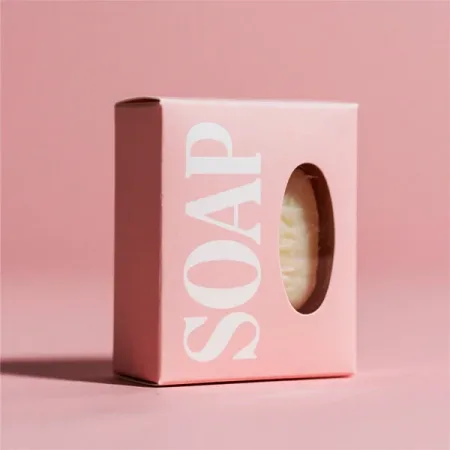
Yes. A small circle or shape can be punched in the front panel, with no film, so the bar peeps through.
Your boxes are made in four to six business days from proof approval, and the free tracked UK delivery afterwards takes a further two to three.
Let us know inside 10 days, photos attached, and we reprint the boxes or give you a refund.