

How many cells can a cosmetic display box have?
Common units hold 6, 12, 18 or 24 cells. We cut the divider grid to your carton size, so other counts and mixed cell sizes are fine.
Written prices from £0.25 a box. Free proof, made in 4–6 business days, free tracked UK delivery.
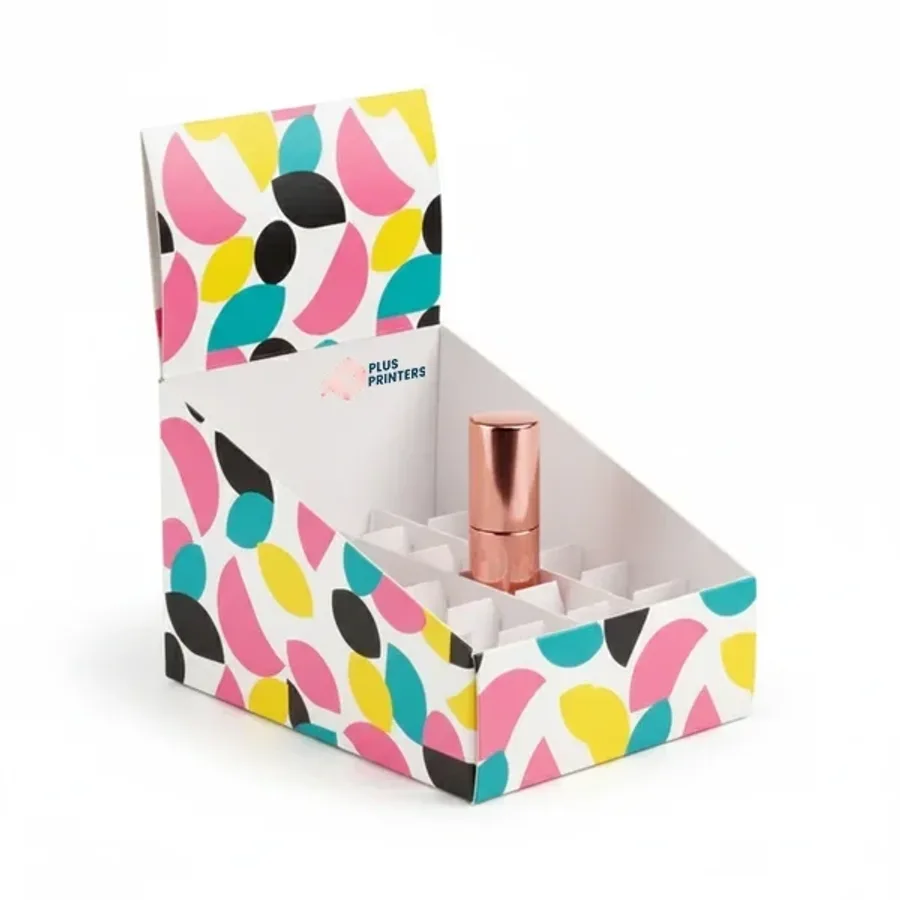
A counter tray with cut dividers that holds 12 or 24 products upright, and a header panel that folds up behind them with your brand on it. Printed inside and out, delivered flat, assembled in a minute.
| Display | Typical unit size |
|---|---|
| 12 lipsticks, 3 x 4 cells | About 180 x 140 x 160 mm with header |
| 24 lipsticks or glosses, 4 x 6 cells | About 240 x 200 x 170 mm with header |
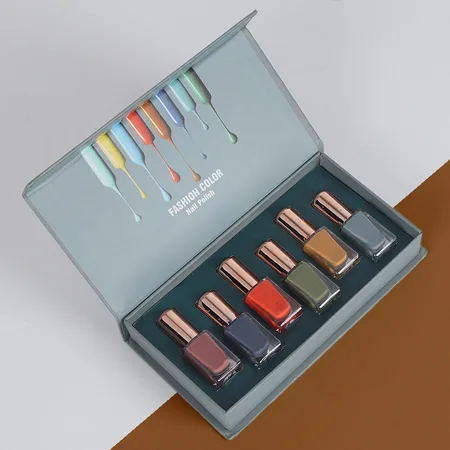
| 6 nail polish bottles in a row | About 220 x 60 x 140 mm with header |
| Tiered unit for palettes and tubes | About 300 x 220 x 200 mm |
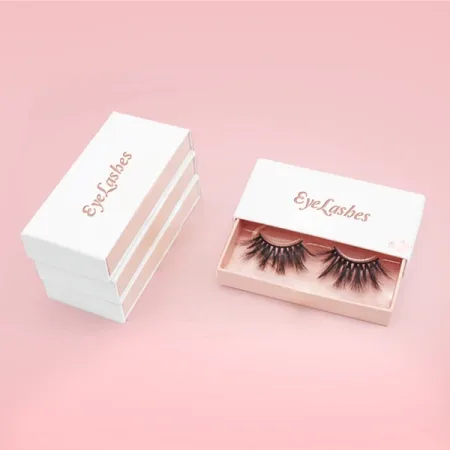
| 12 lash boxes on their edge | About 230 x 120 x 150 mm with header |
Cosmetic display boxes are printed counter units that hold a run of products upright at the till or on a shelf.
A tray with dividers keeps each item in its own cell, and a header panel folds up at the back to carry the brand. They are made from board, shipped flat and sized to the product they display.
A counter display is a shallow tray with a grid of dividers inside it.
Each product stands in its own cell, so the front row stays tidy even when half the stock has sold.
At the back, a tall panel folds up and locks into the tray. That header carries the brand name and a line about the product, which is what a customer reads from across a counter.
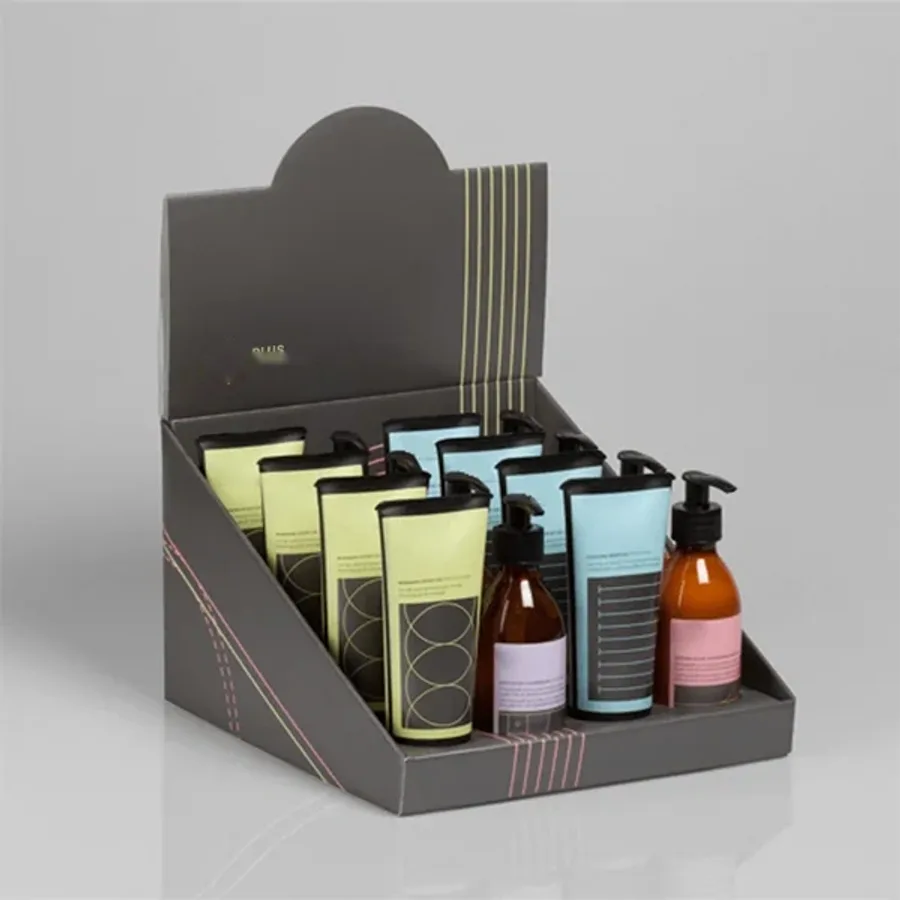
The patterned unit in our photos holds 12 lipsticks in three rows. The tiered version in the second photo steps up at the back. Palettes and tubes on the top row show over the front row.
Brands that sell through other people's counters.
A pharmacy, a gift shop or a salon will give you a small patch of counter space. A display unit is how you use it.
Salons and nail studios also order them for their own reception desk, to sell retail polish or lashes next to the card machine. Market traders and pop-up shops use them because they pack flat between events.
Most of the products we box can be displayed this way. The makeup and nail packaging range covers the cartons that stand in the cells.
That depends on the carton footprint and how much counter space the stockist gives you.
A 12-cell lipstick unit is about 180 mm wide, which most tills can take.
Count the cells by the product, not the display. A cell for a lipstick carton is about 28 mm square. A polish bottle needs about 36 mm, and a lash box on its edge about 25 x 110 mm.
The table shows common layouts. If your product is one we already box, such as a lipstick carton from our range, we match the cell to the carton exactly.
| Product in the cell | Cell size | Common layouts |
|---|---|---|
| Lipstick carton, 25 mm square | About 28 x 28 mm | 12 or 24 cells |
| Gloss carton, 25 x 115 mm tall | About 28 x 28 mm, deep tray | 12 or 18 cells |
| Nail polish bottle, 30 mm | About 36 x 36 mm | 6 or 12 cells |
| Lash box on its edge | About 25 x 110 mm | 12 or 20 slots |
| Eyeshadow palette, 100 x 60 mm | About 105 x 20 mm slot | 8 to 10 slots in a tiered unit |
Short products like lipsticks, balms and small jars suit a single flat tray with a header.
Everything is the same height, so the whole stock shows at once.
Mixed ranges with palettes, tubes and bottles suit a tiered unit. The back row sits higher, as in our photo, so a palette does not hide the tubes behind it.
Tall bottles need a deeper tray so they cannot tip. Bath bombs and soaps use a wider, shallower version, which we cover on the bath bomb display boxes page.
A display unit holds more weight than a carton and stays on a counter for months.
We usually suggest folding boxboard around 400 gsm for lipstick and lash units, with the divider grid adding stiffness.
Units that hold glass, such as 12 polish bottles, are better in thin corrugated board, which is available as an option. It takes the weight without the tray base sagging.
The header is the part that gets knocked, so it locks into the tray with tabs rather than relying on a crease. Board, rigid and finish options are confirmed on your quote.
The header does the talking, so keep it to the brand, the product and one reason to pick it up.
The tray face, which the customer sees at eye level when seated, can carry a shade list or a price slot.
Printing the inside of the tray matters more than people expect. Once stock sells down, the inside of the cells is what shows, so a pattern or a brand colour there keeps the unit looking full.
Gloss lamination suits display units because they get handled and wiped. Foil on the header is an option for a premium counter, and our guide to finishes on beauty boxes shows how each one wears.
Yes.
The tray, the divider grid and the header are die cut and creased so they fold flat. A stockist or a sales rep opens the pack, pushes the tray square, drops in the grid and folds up the header.
No glue or tape is needed at the counter. The tabs lock into slots, which also means a unit can be flattened again after a market and reused.
Flat packs save on postage too. A bundle of ten flat displays posts in one mailer, where ten assembled units would need a large box.
Fill the unit before it reaches the counter.
Stockists are far more likely to use a display that arrives loaded with product than one they have to fill themselves.
Place the shades in a logical order, lightest to darkest or by collection. Put the best seller in the front row where a hand lands first.
Send a spare header with each unit. Headers get bent, and a replacement keeps the display on the counter for another season. For units going to several stockists, talk to us on the phone or WhatsApp and we will size one unit that fits them all.
The first is a header too tall for the counter it sits on.
A 250 mm header blocks the till screen or the cashier's view, and the unit gets moved to the floor.
The second is cells sized to the product rather than its carton. If your lipstick sells in a 25 mm carton, the cell has to take the carton, not the bare tube.
The third is a plain inside. An unprinted white tray looks half empty after the first few sales, which is exactly when you want it to look busy.
Tell us the product that goes in each cell, with its carton size, the number of cells and how many units you need.
Units are quoted per order, from £0.25 per unit for the cartons inside them, and the written quote confirms the display price.
Every display gets a free proof showing the header, tray and grid before anything is cut. Production is 4 to 6 business days after approval and delivery is free and tracked to UK addresses, usually in 2 to 3 business days. A damaged or misprinted batch reported within 10 days with photos is reprinted or refunded.
Choose a real photo of the box you have in mind, put your logo on it, pick a colour and finish, and send it over. Our designers turn it into a free, print-ready proof.
The more we know about what goes inside, the bottle or jar, the quantity and the look you are after, the sharper the price. A packaging specialist replies within one business day with a written quote and a free design proof.
Not answered here? Call +44 7578 382054, message our packaging team on WhatsApp or email info@thecosmeticpackaging.co.uk.
Common units hold 6, 12, 18 or 24 cells. We cut the divider grid to your carton size, so other counts and mixed cell sizes are fine.
Yes. A header panel is part of the die cut and folds up behind the tray, locking in with tabs. Its height is set on the proof.
Yes. For glass we suggest thin corrugated board as an option, with a deeper tray so the bottles cannot tip when the unit is moved.
Flat. The tray, grid and header fold up without glue or tape, and a unit takes about a minute to assemble at the counter.
Yes, and we recommend it. The inside of the cells shows as stock sells, so a printed pattern keeps the display looking full.
A unit with two or more stepped rows, so products at the back sit higher than those in front. It suits mixed ranges of palettes, tubes and bottles.
Yes. A mixed grid with different cell sizes is possible, for example lipsticks in front and glosses behind, as long as the carton sizes are known.
Usually 100 to 150 mm above the tray. Taller headers block till screens and tend to get moved off the counter.
Yes. Because the parts lock with tabs, a unit can be flattened after a market or event and set up again. A spare header helps.
Yes. Many brands fill each unit and post it in a mailer so the stockist only has to put it on the counter.
Use the display box quote request page and list the product per cell, the cell count and the number of units.
Report it within 10 days with photos and the units are reprinted or refunded. Flat packs are checked before dispatch to reduce the risk.