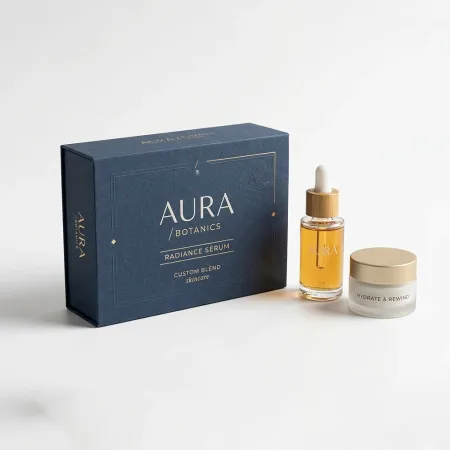
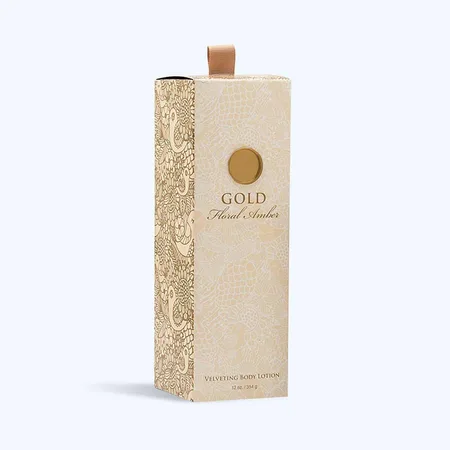
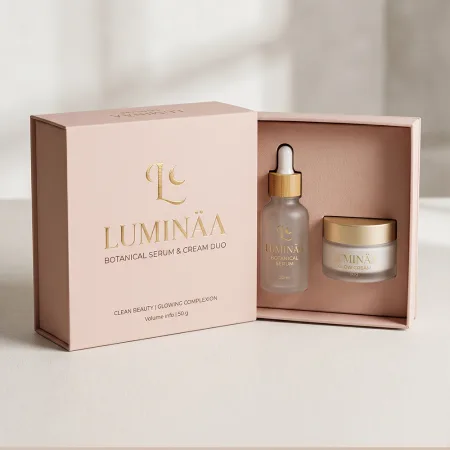
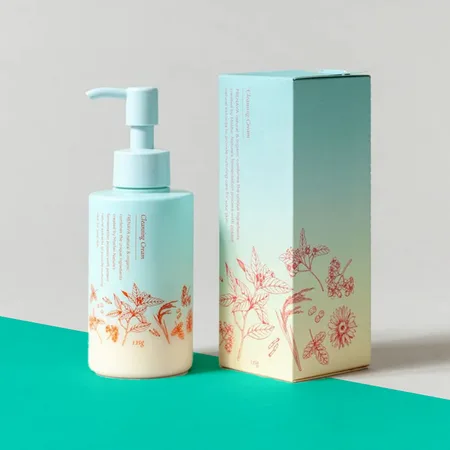
What size box do I need for a 100 ml cream jar?
A typical 100 ml glass jar at 75 mm across and 65 mm tall takes a box of about 80 x 80 x 70 mm. Send your jar and we cut to it.
Written prices from £0.25 a box. Free proof, made in 4–6 business days, free tracked UK delivery.
Square cartons and lid-and-base boxes made around a cream jar, so the heavy glass and the wide lid sit snug instead of rolling. Printed in your colours, with text panels for ingredients and directions, and proofed free before we print.
| Jar | Typical box size |
|---|---|
| 30 ml glass jar | About 55 x 55 x 50 mm |
| 50 ml glass jar | About 65 x 65 x 60 mm |
| 100 ml glass jar | About 80 x 80 x 70 mm |
| 200 ml body butter jar | About 95 x 95 x 85 mm |
Cream jar boxes are near-cube cartons or rigid lid-and-base boxes made for moisturiser, night cream and balm jars.
Because a jar is short, wide and heavy, the box is cut tight to its diameter and lid height so it cannot roll. They are printed to order for UK skincare and grooming brands and delivered free with tracking.
A jar is the awkward one in a skincare line.
It is wider than it is tall, the lid is often wider than the body and the glass weighs more than every other container on the shelf.
A bottle carton can lean on its height to stay closed. A jar box cannot. If the jar is loose it rolls and knocks the lid, and the print on the inside walls shows the marks.
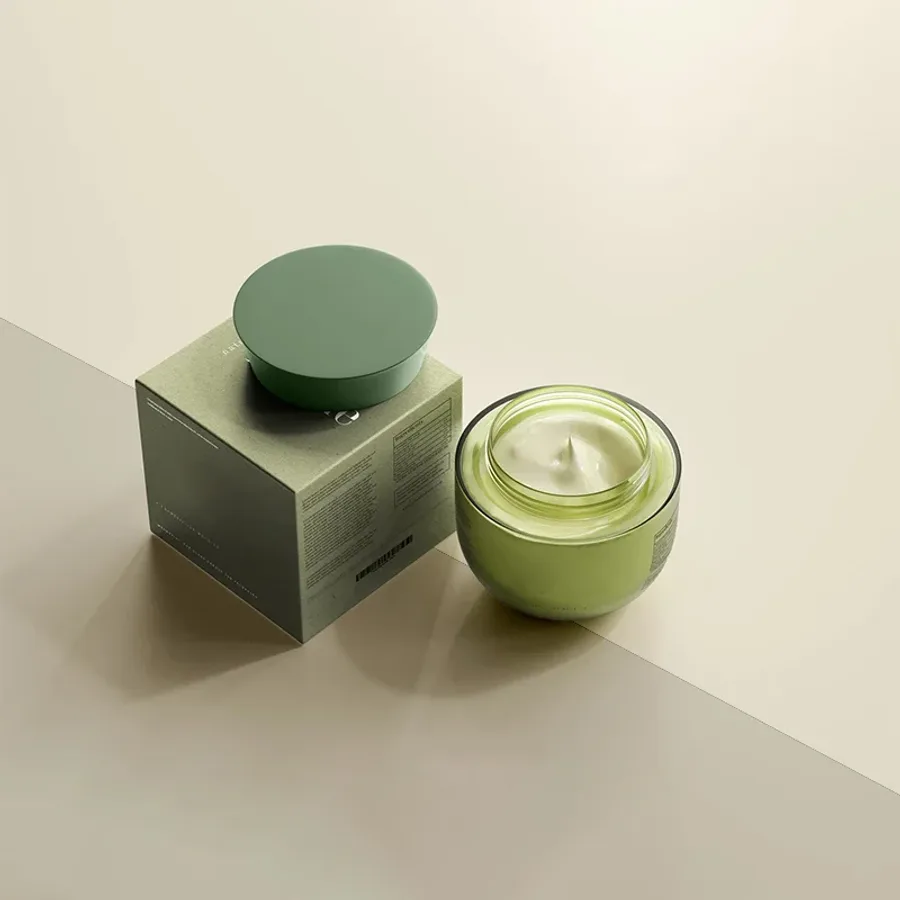
So cream jar boxes are near cubes. The sage green carton in our photos shows it well: the jar fills the box with only a sliver of space around the lid.
Any product that sells in a jar with a screw lid.
The jars themselves run from 15 ml balms to 200 ml body butters, and the brands range from a one-person aromatherapy maker to a men's grooming line.
For brands with a jar and a bottle in the same line, the matching skincare boxes for the whole line are listed by product.
Measure the jar at the widest point, which is usually the lid, and the full height with the lid screwed on.
Add 2 to 3 mm to each dimension. A typical 50 ml glass jar at 60 mm across and 55 mm tall becomes a box of about 65 x 65 x 60 mm.
Weigh the jar as well. A full 100 ml glass jar can pass 300 g, and that decides the board weight more than the size does.
Jars from different moulders differ by a few millimetres at the shoulder, so we always work from your sample or drawing. Our UK cosmetic box size reference has more jar starting points.
| Jar | Diameter and height | Typical box |
|---|---|---|
| 30 ml glass jar | About 50 x 45 mm | About 55 x 55 x 50 mm |
| 50 ml glass jar | About 60 x 55 mm | About 65 x 65 x 60 mm |
| 100 ml glass jar | About 75 x 65 mm | About 80 x 80 x 70 mm |
| 200 ml PET jar | About 90 x 80 mm | About 95 x 95 x 85 mm |
A reverse tuck end cube in boxboard of around 400 gsm is the working choice.
It is quick to fold, stacks in a case and prints edge to edge.
A rigid lid and base box, like the white one with a black band in our photos, suits a premium night cream or a salon retail line. The lid lifts off, the jar sits in a cavity and the box lives on the dressing table.
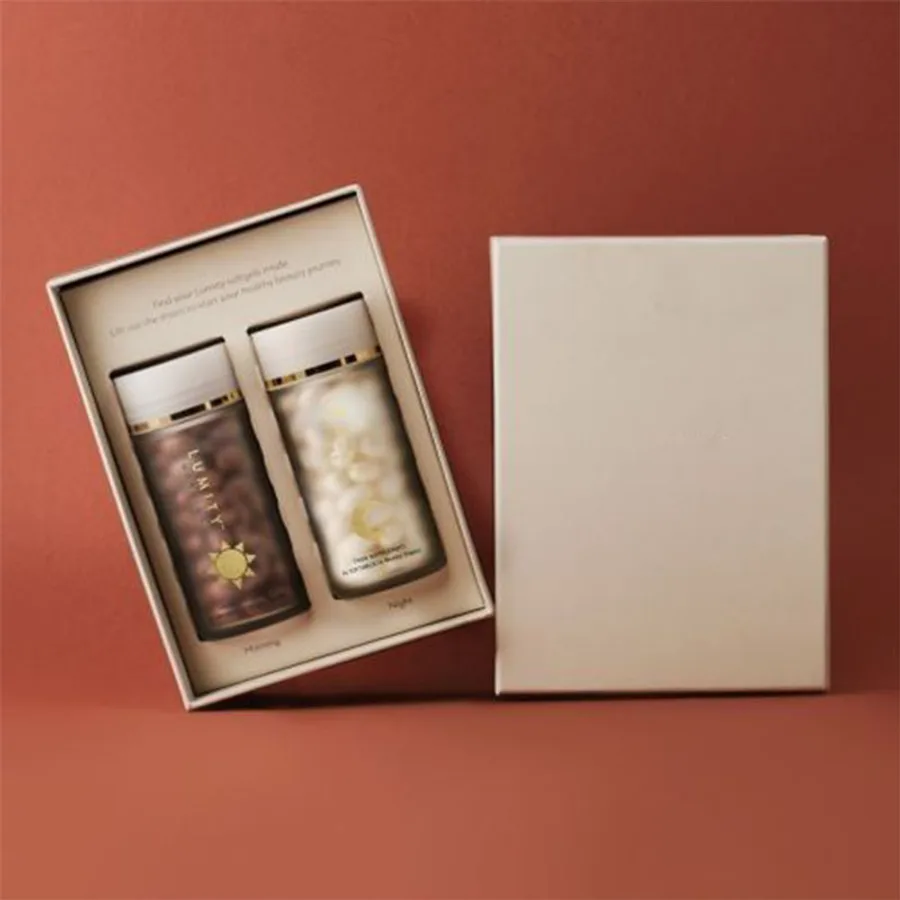
The two-jar set in the photos uses a rigid base with a card tray cut for two cavities, and a plain lid. It is a simple way to sell a day and night pair. Both constructions are drawn in our guide to cosmetic box closures and styles.
Other board, rigid and finish options are there on request.
A cube gives you five almost equal panels.
Put the brand and product name on the front, directions on one side, ingredients on the other and the batch code and weight on the base.
Solid colour across all panels, as on the sage box, reads well from a distance. Keep the type small and pale on a dark ground, and leave the top panel for the logo alone.
CMYK, two colour and one colour print are all on offer, and both cartons and rigid boxes take inside print.
Matt lamination is the safe pick on solid colours because a jar box is handled every day and gloss shows wear.
A debossed logo on uncoated board gives a quiet, tactile front.
Foil works on a rigid lid where there is a flat, wide panel for it. Spot UV over a matt laminate can pick out a pattern on the side panels.
Each finish is an option on the quote, and our note on embossing, foil and soft touch finishes explains the pairings that print cleanly.
The jar should not move inside the box, and the box should not move inside the parcel.
A foam or card insert with a round cavity holds the jar and takes the shock when a parcel lands on its corner.
For a rigid lid and base box, a tray insert with a cavity is the normal fit. For a cube carton, a folded card cradle at the base does the job.
Post the carton inside an outer box with padding round it, never on its own. Brands shipping daily often use cosmetic mailer boxes with inserts as that outer.
Inserts in card, foam or tissue can be added on request.
Cubes stack.
Three or four of the same box in a short column at the end of a counter is a display that costs nothing. Keep the logo on the top panel as well as the front so the stack reads from above.
In a salon cabinet, stand one box beside an open jar so customers see the texture of the cream and the box they will take home.
If the jar is clear glass and the cream is coloured, a round window in the front panel is an option that lets the product show.
Measuring the jar body instead of the lid is the usual error.
The lid is often 3 to 5 mm wider. Measure it.
Choosing a thin board for a heavy glass jar is the second. A 400 gsm board holds a 100 ml jar; a lighter one bulges at the base.
Third, putting the batch code on the base panel of a rigid box, where it cannot be seen without lifting the box. On rigid boxes, use the back of the base.
Here is the sequence from first message to delivery.
Faults or transit damage: photos within 10 days, and the boxes are reprinted or refunded.
The quickest start is the cream jar box quote form with your jar sizes attached.
Choose a real photo of the box you have in mind, put your logo on it, pick a colour and finish, and send it over. Our designers turn it into a free, print-ready proof.
The more we know about what goes inside, the bottle or jar, the quantity and the look you are after, the sharper the price. A packaging specialist replies within one business day with a written quote and a free design proof.
Not answered here? Call +44 7578 382054, message our packaging team on WhatsApp or email info@thecosmeticpackaging.co.uk.
A typical 100 ml glass jar at 75 mm across and 65 mm tall takes a box of about 80 x 80 x 70 mm. Send your jar and we cut to it.
Yes. Use a rigid lid and base with a two-cavity tray, as in our photos. Cartons with a divider are also possible.
A round or square window can be cut in the front panel. It works best with clear glass jars and a coloured cream.
Yes, in boxboard of about 400 gsm. Heavier jars over 100 ml, or sets, move to a rigid box on request.
Yes. A cube gives you four side panels, and directions and ingredients each get their own in most layouts.
Yes. The box is cut to the measured size, so the material of the jar does not matter. Lighter PET jars can use a lighter board.
Yes, rigid lid and base boxes arrive made up. Cube cartons arrive flat and fold in seconds.
Yes, inside print is available. A pattern on the inside of a rigid lid is a popular touch for gift editions.
Every cream jar box is quoted from £0.25 per unit; size, board, finish and quantity move the figure. More pricing questions are answered on our cosmetic packaging questions and answers page.
Yes. Every run is quoted on its own numbers, so a test batch is fine.
Count 4–6 business days of making once the proof is approved, and 2–3 more for free tracked delivery in the UK.
We cut to the sizes you approve on the proof, so check the dieline carefully. If a box is made wrongly to that proof, photos inside 10 days get a reprint.